





AI
Odoo Development
 Hardik Soni
29 July 2026
Hardik Soni
29 July 2026
Odoo AI in 2026: The Complete Guide to Native AI in Odoo 19 & 20
 Hardik Soni
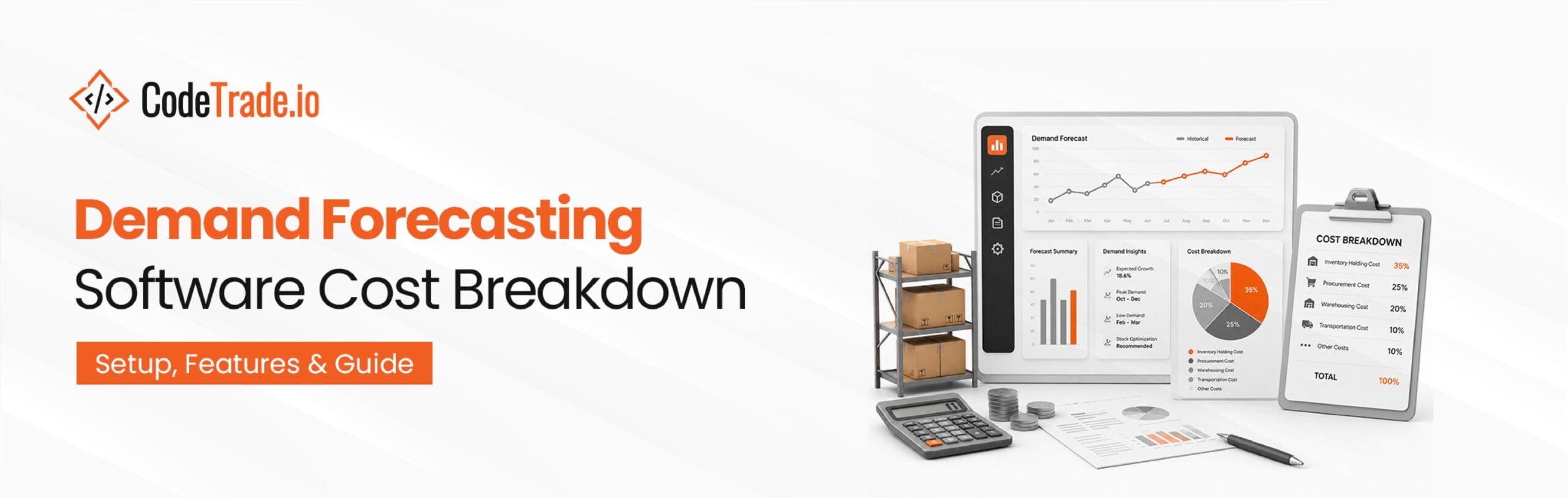
Forecasting mistakes rarely stay inside planning reports. They show up later through rising inventory costs, missed sales, delayed purchasing, and customer fulfillment issues. For businesses managing multiple products or sales channels, even small forecasting gaps can create expensive operational problems. That is why Demand Forecasting Software is increasingly being viewed as a business investment rather than only a planning tool.
Pricing is not always simple to evaluate. Costs vary based on forecasting complexity, deployment model, integrations, and the level of automation required, especially for businesses already investing in ERP software development. Some businesses choose cloud demand forecasting software for speed and flexibility. Others invest in custom demand forecasting software built around deeper operational workflows.
According to Statista, inventory carrying costs account for 20% to 30% of total inventory value annually for many businesses. That makes forecasting accuracy directly tied to cost control and operational efficiency.
This guide breaks down the costs, features, and key considerations businesses should evaluate before investing.
Planning cycles are getting shorter while inventory decisions are becoming more expensive when they go wrong. Businesses are managing more SKUs, more sales channels, and higher expectations around product availability.
At the same time, rising warehousing costs continue to pressure margins, especially when slow-moving inventory remains in storage longer than expected. Forecasting is now closely connected to cost control across purchasing, inventory, and fulfillment operations. This is one reason Demand Forecasting Software is becoming a higher priority in 2026 planning budgets.
As planning becomes more complex, businesses are investing in stronger forecasting systems to improve planning accuracy, reduce operational waste, and respond faster to changing demand.
The total cost of forecasting software usually goes beyond the software license that businesses compare during vendor evaluation.
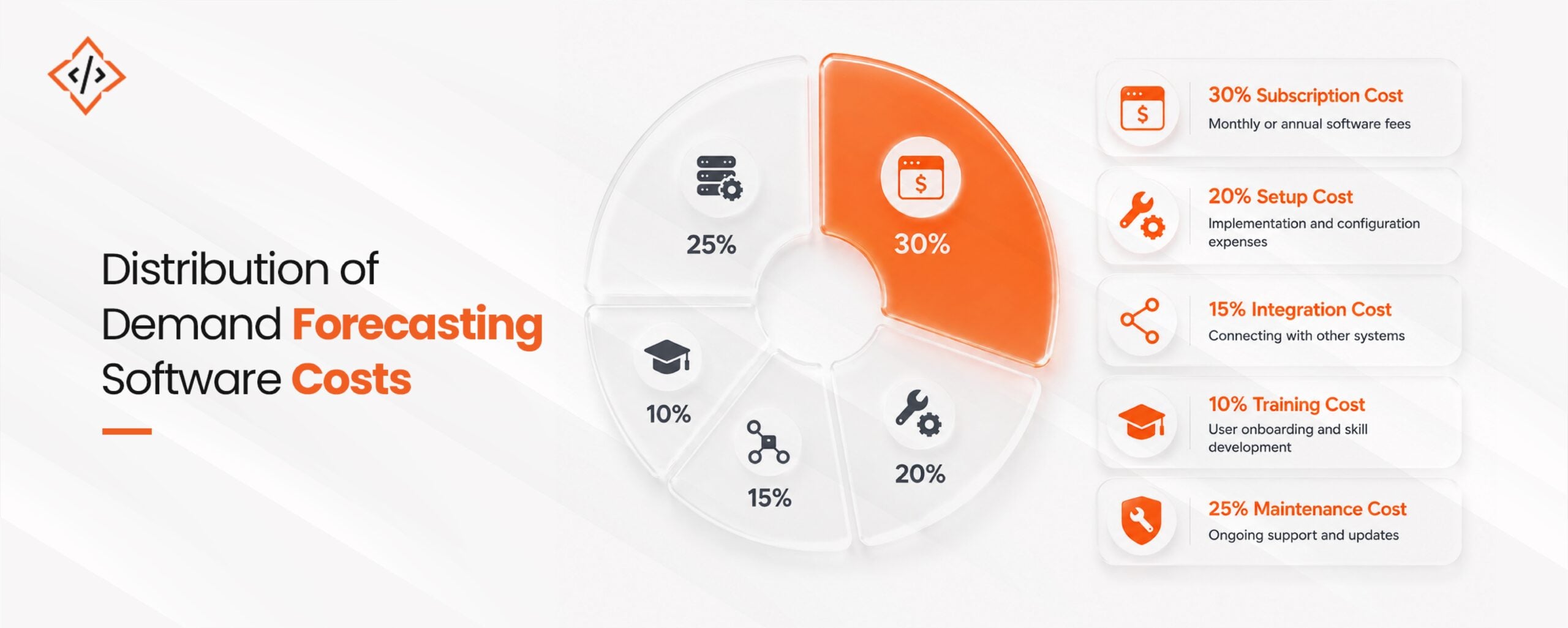
Subscription pricing typically depends on users, forecasting volume, and platform capability. Cloud demand forecasting software often starts between $200 and $1,500 per month for growing teams. Mid-market platforms generally range from $15,000 to $40,000 annually. Enterprise demand forecasting solutions can exceed $75,000 per year, depending on data complexity and planning scope.
Setup costs cover implementation before the platform goes live. This usually includes workflow configuration, forecasting model setup, and historical data migration. Most businesses spend between $5,000 and $30,000, depending on operational complexity and the amount of planning data involved.
Integration cost depends on how many systems need to connect with the forecasting platform. ERP systems, CRM platforms, warehouse tools, and POS software often require additional setup work. Integration budgets typically range from $3,000 to $25,000, especially for businesses operating across multiple channels or locations.
Training costs are often missed during budgeting. User onboarding, process training, and workflow adoption usually range between $2,000 and $10,000. Businesses using demand planning and forecasting software across multiple teams may spend more depending on adoption requirements.
Ongoing maintenance includes support, upgrades, platform improvements, and model retraining over time. Businesses typically spend 15% to 25% of annual software costs on maintenance, depending on the software model and service agreement.
Pricing often changes based on how forecasting fits into the broader planning and operational environment.
The deployment model is usually the first pricing factor. Cloud demand forecasting software generally costs less upfront, while on-premise or hybrid deployments often require higher infrastructure and implementation investment.
Forecast complexity also affects pricing. Businesses managing thousands of SKUs, multiple warehouse locations, several sales channels, or strong seasonal demand usually require more advanced forecasting models.
Data volume and quality also influence cost. Historical sales, promotions, supplier lead times, and market signals often require deeper data mapping and ongoing model calibration.
AI capabilities add another pricing layer. AI demand forecasting software often costs more because it includes predictive modeling, automated forecasting adjustments, and faster decision support.
Customization also impacts final pricing. Businesses with specific approval flows, ERP dependencies, or operational planning requirements usually need additional configuration before deployment, especially when supported by machine learning development services.
The right forecasting features should improve planning decisions without adding complexity that teams rarely use after implementation.
Demand modeling is often the first feature worth investing in. It builds the forecasting foundation and helps teams plan demand using reliable historical patterns.
Inventory planning improves visibility across stock movement, replenishment timing, and purchasing decisions. Strong inventory forecasting software helps reduce excess stock while maintaining product availability.
Sales forecasting connects demand planning with revenue planning. Strong sales forecasting software helps teams forecast pipeline movement, seasonality, and expected sales performance with greater clarity.
Scenario planning allows businesses to test decisions before acting on them. This becomes especially useful for teams using AI demand forecasting to respond to changing demand patterns, supply disruptions, or unexpected shifts across markets.
AI forecasting adds predictive intelligence and automation to planning. It helps businesses respond faster to changing demand patterns by identifying shifts that traditional forecasting models often miss. This improves forecasting speed, planning accuracy, and decision-making across inventory, purchasing, and fulfillment teams. That makes AI demand forecasting software a stronger long-term investment for businesses looking to build more responsive planning operations.
Demand forecasting delivers the most value where planning complexity grows faster than teams can manage manually.
Retail businesses managing multiple stores or fast-changing buying patterns often need stronger forecasting visibility. Retail demand forecasting software helps plan stock around promotions, seasonality, and local demand shifts more accurately.
Ecommerce brands often manage fast-moving inventory across marketplaces and direct sales channels. Ecommerce demand forecasting software helps forecast demand across SKUs while improving replenishment planning and stock availability.
Supply chain operations benefit most when forecasting connects purchasing, inventory movement, and fulfillment planning in one shared view. Supply chain forecasting software supports faster decisions across warehouses, suppliers, and changing demand cycles.
Large businesses with multiple locations or complex planning structures often need more advanced forecasting support. Enterprise demand forecasting solutions are best suited for operations managing scale, forecasting gaps, and growing planning complexity across teams.
The right software should solve today’s planning needs while remaining practical enough to support future growth.
The first step is defining the exact forecasting problem the business needs to solve. This may include inventory planning, sales forecasting, purchasing visibility, or demand accuracy across channels.
Forecasting quality depends heavily on data quality. Businesses should review historical sales, inventory movement, supplier timelines, and demand inputs before selecting demand planning and forecasting software.
The software should fit naturally into the existing operational ecosystem. Strong integration with ERP platforms, inventory systems, and connected tools helps forecasting become part of daily planning, particularly for teams already using Odoo implementation services.
Forecasting needs often change as operations grow. The right Demand Forecasting Software should support expansion across products, locations, and planning complexity rather than solving only current operational gaps.
Every forecasting decision shapes what happens next across the business. It affects inventory movement, purchasing timelines, warehouse capacity, and how quickly teams can respond to changing demand. As planning becomes more complex, businesses need systems that support faster and more accurate decisions across operations. The real value of Demand Forecasting Software comes from reducing uncertainty before it turns into cost.
For businesses planning investments in 2026, the stronger decision is choosing software that improves planning accuracy while staying flexible as operations grow. The right platform should support everyday workflows without adding unnecessary complexity. When forecasting becomes part of daily decision-making, planning becomes more reliable across the business.
At CodeTrade, demand forecasting solutions are designed around real operational workflows, not generic planning models. The focus stays on helping businesses connect forecasting with inventory planning and supply chain visibility. As an AI development company, CodeTrade builds solutions around real operational workflows and practical business decisions over time.

 Hardik Soni
 Chand Prakash
 Chand Prakash
 Chand Prakash
 Chand Prakash