






Odoo Development
ERP
 Hardik Soni
03 September 2026
Hardik Soni
03 September 2026
How Should Mid-Market Teams Plan an Odoo 18 to Odoo 19 Upgrade?
 Hardik Soni
Most manufacturing ERP projects fail long before go-live because companies compare software features before comparing operational fit. Selecting the wrong infrastructure stalls factory operations. Plant managers frequently evaluate Odoo 19 for manufacturing, SAP Business One, and Dynamics 365 Business Central to fix floor inefficiencies.
However, an independent market report by Gartner indicates that by 2027, more than 70% of recently implemented ERP initiatives will fail to fully meet their original business case goals. Choosing software without evaluating production constraints risks an expensive implementation failure.
This practical ERP comparison for manufacturers bypasses sales demonstrations to evaluate actual engineering requirements, deployment costs, and platform architectural constraints.
Determining long-term operational value requires analyzing how software structures align with actual factory floor budgets and resource constraints.
| Category | Odoo 19 | SAP Business One | Dynamics 365 Business Central |
|---|---|---|---|
| Best For | High-growth firms needing rapid adaptation. | Stable mid-market firms with rigid workflows. | Complex mid-sized plants with Microsoft reliance. |
| Licensing Cost | Low upfront modular per-user pricing model. | Higher upfront traditional enterprise software licensing. | Mid-to-high subscription tiers based on features. |
| Customization | Open-source framework allows unlimited interface modifications. | Rigid architecture requires certified developer intervention. | Proprietary AL language extension model coding. |
| Manufacturing Depth | Excellent material requirements planning and routing execution. | Strong standard inventory and production management base. | Advanced shop floor control and capacity scheduling. |
| Deployment Speed | Agile phased implementation options cut setup timelines. | Structured traditional deployment methodologies take longer. | Standardized cloud implementation templates streamline setup. |
| System Ecosystem | Vast third-party application community marketplace options. | Highly controlled dedicated partner network solutions. | Deep native Microsoft AppSource marketplace integration. |
| Data Architecture | Single unified PostgreSQL database reduces integration gaps. | Relies on high-performance SAP HANA database engines. | Utilizes cloud-hosted Microsoft SQL Server structures. |
| User Interface | Intuitive modern web-based navigation minimizes training needs. | Traditional corporate ERP interface feels slightly dated. | Familiar Office-style web interface layout design. |
Evaluating structural differences across core operational modules helps plant managers prevent production disruptions and material shortages.
Material scheduling accuracy dictates shop floor efficiency. According to an industrial market analysis by Bain & Company, manufacturing organizations that fail to integrate technologies like automated scheduling and artificial intelligence miss out on 30% to 50% of their potential productivity. Advanced production planning ERP configurations allow manufacturers to predict material availability and schedule labor dependencies effortlessly.
Raw material calculations must align with dynamic inventory shifts. Utilizing Odoo 19 for manufacturing helps teams calculate material requirements. Planning runs instantly based on reordering rules. This specific step provides an active manufacturing ERP software comparison against older batch processing systems.
Real-time tablet interfaces give operators immediate visibility over work center capacities. Tracking operation times helps managers identify machinery bottlenecks before lines halt completely.
Regulated production lines require meticulous tracking history. Comparing Odoo vs SAP Business One reveals distinct differences in lot and serial number genealogy tracking.
Automated trigger points flag defective items during enterprise manufacturing solutions inspection routing steps. Teams can enforce strict validation checks at specific work centers to control waste metrics.
| Feature | Odoo 19 | SAP Business One | Dynamics 365 Business Central |
|---|---|---|---|
| MRP Speed | Real-time dynamic recalculations. | Scheduled batch processing runs. | Master production scheduling logic. |
| Shop Floor UI | Modern touch-screen tablet view. | Standard desktop data entry. | Role-tailored web client screens. |
| Traceability | Double-entry upstream tracking. | Batch card serial registration. | Item tracking dimension codes. |
| Quality Control | Automated routing inspection checks. | Manual quality alert logs. | Structured test inspection plans. |
Analyzing complete software spending structures prevents unexpected infrastructure overhead from draining mid-market operational capital post-deployment.
| Cost Dimension | Odoo 19 | SAP Business One | Dynamics 365 Business Central |
|---|---|---|---|
| Licensing Costs | Transparent per-user subscription includes all standard applications without tier blockages. | Upfront per-user core fees plus added recurring maintenance software contracts. | Tiered subscription pricing based on essential or premium manufacturing seat requirements. |
| Implementation Costs | Agile framework deployment model minimizes initial system configuration hours substantially. | Traditional certified partner methodologies demand highly structured and longer deployment phases. | Standardized implementation methodology templates streamline initial database migration activities. |
| Customization Costs | Open-source foundation lowers development friction for internal IT teams writing modifications. | Rigid engineering architecture forces heavy reliance on specialist SDK consulting hours. | Proprietary AL language extension development scales expenses during complex process adjustments. |
| Three-Year Operating Costs | Minimal infrastructure footprint combined with single database management keeps maintenance low. | Ongoing database optimization demands premium server infrastructure outlays over time. | Cloud subscription escalation tracking impacts overall lifecycle software budgets predictably. |
| Upgrade Management | Automated version migrations reduce structural code rewrites during platform updates. | Legacy version transitions frequently require complete database restructure projects. | Microsoft handles continuous cloud software updates automatically through monthly cycles. |
| Support Infrastructure | Global community networks complement direct enterprise customer support ticket desks. | Restricted authorized reseller networks manage exclusive client maintenance service channels. | Specialized partner network handles frontline troubleshooting using structured SLA frameworks. |
Every enterprise architecture presents distinct competitive advantages depending on specific manufacturing floor priorities and structural budgets.
Modifying software code to match complex manufacturing workflows introduces major long-term expenditures that often exceed initial licensing budgets.
| ERP Platform | Development Flexibility | Customization Cost Profile | Upgrade Impact & Technical Debt |
|---|---|---|---|
| Odoo 19 | Open-source architecture permits complete interface and database modifications. | $25 – $50 / hour Low to moderate developer hourly fees. Internal IT teams can alter source code directly. | Modifications can break during major version migrations if automated scripts are missing. |
| SAP Business One | Rigid, proprietary core requires certified software development kit (SDK) engineers. | $100 – $175 / hour High consulting outlays; specialized partner intervention is mandatory for custom fields. | Heavily modified legacy structures complicate standard system patch applications. |
| Dynamics 365 BC | Extension-based development isolates custom code from the core application layer. | $120 – $200 / hour Premium developer fees; requires deep knowledge of Microsoft AL programming language. | Monthly automated cloud updates can occasionally conflict with custom extension logic. |
Note: The hourly development rates listed above reflect standard market ranges for 2026 and vary dynamically based on vendor location, development complexity, and specific service provider capabilities.
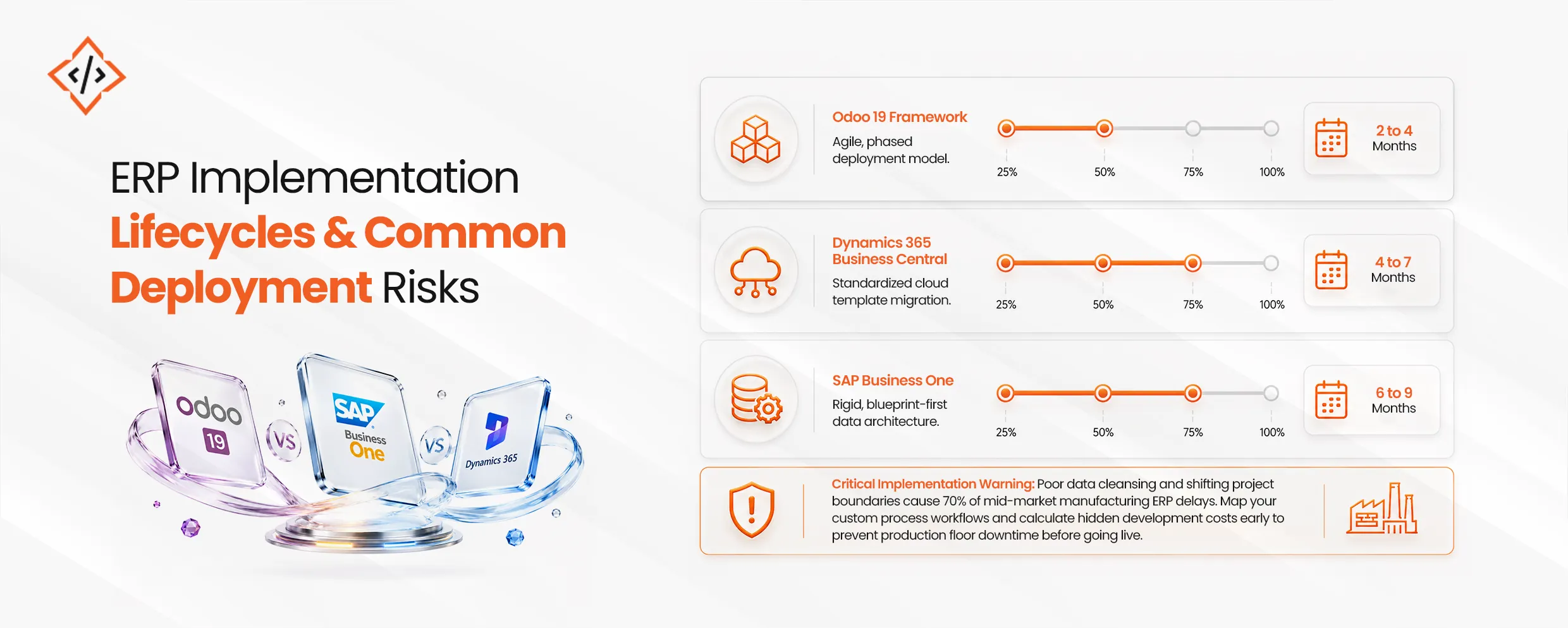
Deploying a new digital core requires balancing strict launch timelines against potential production downtime risks on the factory floor.
Standard Odoo implementation services typically wrap up within 8 to 16 weeks. The flexible modular structure allows project teams to launch core inventory apps before activating complex shop floor features.
Deploying this traditional SAP Business One manufacturing ERP package generally requires a structured 6 to 9 month timeline. Certified consultants must rigorously configure data blueprints before migrating any historical production records to the live database.
Setting up Dynamics 365 Business Central manufacturing tracks usually takes 4 to 7 months to complete fully. Utilizing pre-built cloud migration templates helps technical teams quickly standardize financial ledgers and multi-site warehouse locations.
Poor data cleansing and shifting project boundaries frequently delay mid-market manufacturing ERP rollouts. Planning for future Odoo migration services early helps managers avoid budget depletion and preserve data integrity before reaching the final user testing phase.
Selecting a digital architecture requires matching software processing models directly with your factory floor operational framework.
Expanding shops require adaptable software to handle shifting production volumes without incurring massive licensing overhead penalties. Deploying Odoo 19 for manufacturing provides an agile open-source base that adapts to fluctuating floor processes within a rapid 12-week onboarding window.
Managing distributed supply chains requires rigid financial consolidation controls and global inventory visibility tracking tools. The SAP Business One manufacturing ERP system unifies international plant communications under a highly controlled database network over a 6-month deployment phase.
Formula-driven blending operations demand absolute batch consistency and strict shelf-life inventory management ERP tracking metrics. Comparing Odoo vs Dynamics 365 highlights how structured process recipes require rigid ingredient batch control features to eliminate raw material waste.
Assembling distinct component parts requires a deep bill of materials routing and precise production planning ERP scheduling capacity. Executing a detailed manufacturing ERP software comparison ensures your team picks a platform capable of tracking real-time labor costs per assembly line.
Enterprises reliant on Excel and Azure infrastructure profit from choosing Dynamics 365 Business Central manufacturing tracks. This cloud ERP for manufacturing standardizes production data across familiar workspace environments inside an efficient 5-month transition lifecycle.
Selecting your next digital backbone comes down to your core operational priority rather than analyzing endless feature checkboxes. This simple decision tree guides your final software selection path.
Choose Odoo 19: If your manufacturing shop prioritizes lower upfront implementation costs, open-source code customization, and an agile interface that employees can adopt quickly.
Choose SAP Business One: If your enterprise requires rigid corporate governance, deep financial audit compliance, and highly standardized material procurement controls across multi-site distribution networks.
Choose Dynamics 365 Business Central: If your organization already operates entirely within the Microsoft cloud ecosystem and demands deep native integration with Office tools alongside advanced shop floor scheduling capacity.
Successful mid-market manufacturing ERP selection depends entirely on operational fit, deployment timelines, and long-term total ownership costs. Factory leaders must prioritize an architecture that mirrors their current shop floor routing processes while supporting international business expansion over the next five years. Selecting software based solely on superficial interface demonstrations risks creating expensive engineering bottlenecks and data silos post-deployment.
Evaluating architecture alignments through a detailed Odoo vs SAP Business One or Odoo vs Dynamics 365 assessment clarifies true technical constraints before capital deployment. CodeTrade provides specialized industrial consulting to guide production teams through complex manufacturing ERP software comparison metrics. CodeTrade engineering experts help mid-sized plants deploy scalable cloud ERP for manufacturing models that stabilize operational margins smoothly.
 Hardik Soni
 Chand Prakash
 Abhishek Karad
 Hardik Soni
 Hardik Soni