




Odoo Development
eCommerce
 Hardik Soni
29 October 2026
Odoo WooCommerce connector: how to connect, sync, and automate your store (2026 guide)
 Hardik Soni

Product searches used to start with keywords. A shopper typed a few words into Google or a store’s search bar and then filtered results by price, brand, or rating. Today, more shoppers describe what they need in a full sentence to ChatGPT, Gemini, Perplexity, or Copilot and receive a short list of suggestions.
These tools are AI shopping agents, and they are becoming a regular part of how people find products. According to Adobe data reported by TechCrunch, AI-referred traffic to US retail sites rose 393% in the first quarter of 2026. In March, those visits converted 42% better than non-AI traffic.
This guide explains what AI shopping agents are, how they change product discovery, and what eCommerce businesses can do now.
An AI shopping agent is software that helps a person find, compare, and sometimes buy products through a conversation. The shopper describes a need in plain language, and the agent searches product data, weighs options, and returns recommendations with reasons.
They come in a few forms:
Today, most activity sits in the first two groups. Fully autonomous buying is still early, as the next sections explain.
Agentic commerce is the wider term for this shift. It covers every step where AI takes part in shopping, from research to payment and support. Shopping agents are the tools that make agentic commerce happen.
AI-powered product discovery works differently from keyword search. An agent reads the shopper’s full request, including budget, use case, and preferences, and then matches it against product attributes instead of page titles.
The main changes are:
This is how generative AI in eCommerce is changing the early part of the buying journey. The shortlist is decided before the shopper ever reaches a product page.
Shoppers are comfortable using AI to research products. Fewer are ready to let an agent complete the purchase for them.
The traffic numbers keep rising. According to Adobe data reported by Digital Commerce 360, AI-referred traffic to US retail sites grew 62% year over year in July 2026. Those visits converted 60% better than non-AI traffic, the 11th month in a row that AI traffic led on conversion.
Checkout inside AI tools has moved more slowly. OpenAI launched Instant Checkout in ChatGPT in September 2025 so US shoppers could buy without leaving the chat. In March 2026, it stepped back from that feature.
As Forrester noted, checkout moved into merchant apps inside ChatGPT or back to retailers’ own websites. Product search and comparison in ChatGPT continue.
Work on agent payments has not stopped. Industry standards such as OpenAI and Stripe’s Agentic Commerce Protocol and Google’s Agent Payments Protocol aim to let agents pay safely on a shopper’s behalf. For now, though, discovery is where most of the value sits for retailers.
AI shopping agents for eCommerce create new risks along with new traffic. Planning for them early protects margins and brand reputation.
Key risks include:
None of these risks is a reason to block AI agents. Each one points to the same fix, which is accurate, complete, and well-structured product data.
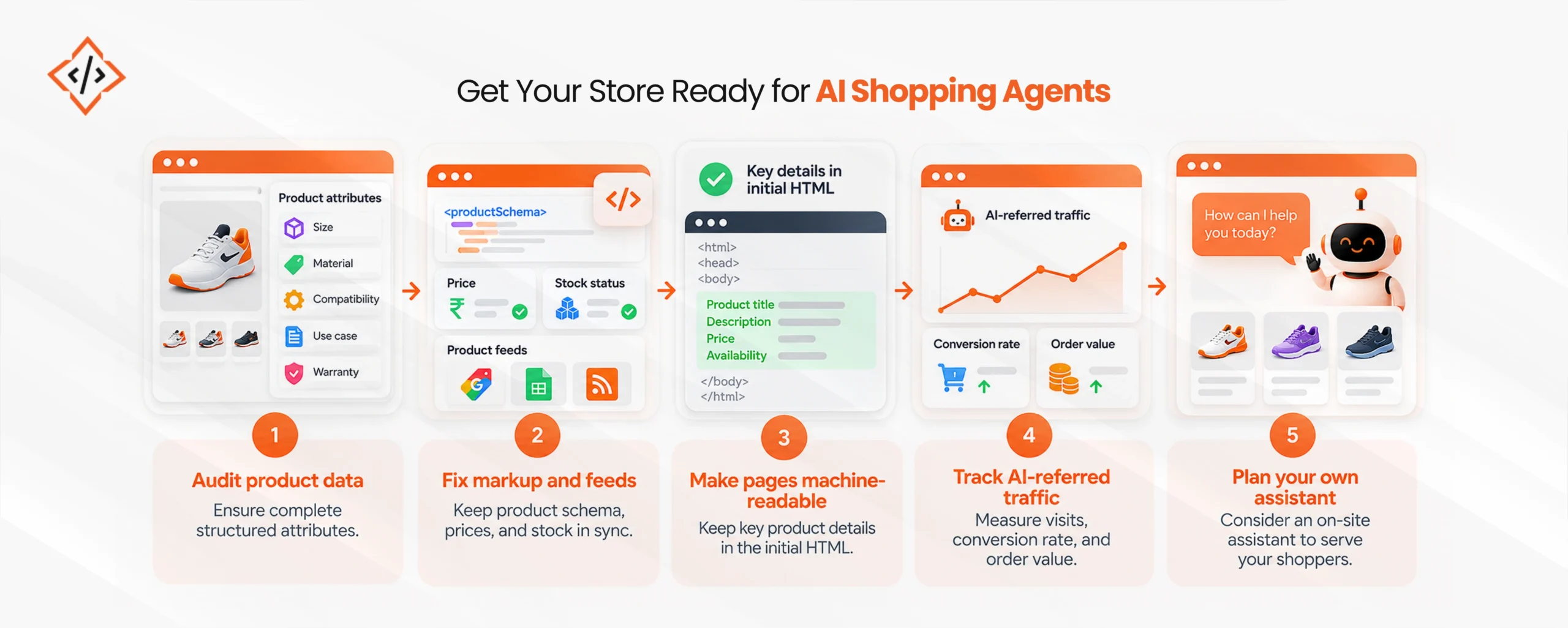
Preparation starts with data and measurement. Integrations come later.
Check that each product has complete structured attributes, such as size, material, compatibility, use case, and warranty. Fill gaps in your product information system, not only on the page.
Make sure the product schema, prices, and stock status match what shoppers see. Keep product feeds updated often, since agents may pull from feeds rather than pages.
Key product details should appear in the page’s initial HTML. Content that loads only after scripts run can be missed by some crawlers and agents.
Set up analytics to separate visits from AI assistants and measure their conversion rate and order value. This shows whether the channel deserves more investment.
Once the data is solid, consider an on-site assistant that serves your shoppers directly. Teams often use AI development services at this stage to connect catalog, search, and order data.
External agents decide how your products appear in their answers. An on-site assistant gives you that control on your own store, using your catalog, policies, and brand voice.
A useful on-site assistant usually needs these parts:
This is where conversational commerce becomes a direct part of the store. Teams that want the assistant to write product comparisons or guided answers often add generative AI development to the same stack. The result is an AI-driven shopping experience that you own and measure.
AI shopping agents are changing how shoppers build their shortlists. Discovery now happens in conversations, and products with complete, accurate data are the ones that get recommended.
Checkout through agents is still developing, so the practical focus for 2026 is clear. Clean up product data, measure AI-referred traffic, and give shoppers a strong assistant on your own site. Those steps pay off today and prepare the store for whatever form agent purchasing takes next.

 Hardik Soni
 Hardik Soni
 Chand Prakash
 Chand Prakash
 Hardik Soni