AI, eCommerce & Retail 25 August 2026AI Automation for Ecommerce: How to Increase Online Sales
Key Takeaways:
- AI automation for ecommerce directly multiplies revenue by shifting retail operations from reactive manual tasks to predictive, autonomous execution.
- Algorithmic pricing models protect baseline profit margins by continuously adjusting to competitor stock levels and real-time market velocity.
- Deploying AI chatbots for ecommerce alongside dynamic storefront rendering eliminates buyer friction and significantly increases average order value.
- Intelligent ecommerce marketing automation eliminates wasted ad spend by autonomously reallocating budgets to the highest-converting campaigns in real time.
- Deployments only succeed when digital operations leaders unify fragmented legacy data silos before scaling complex machine learning models.
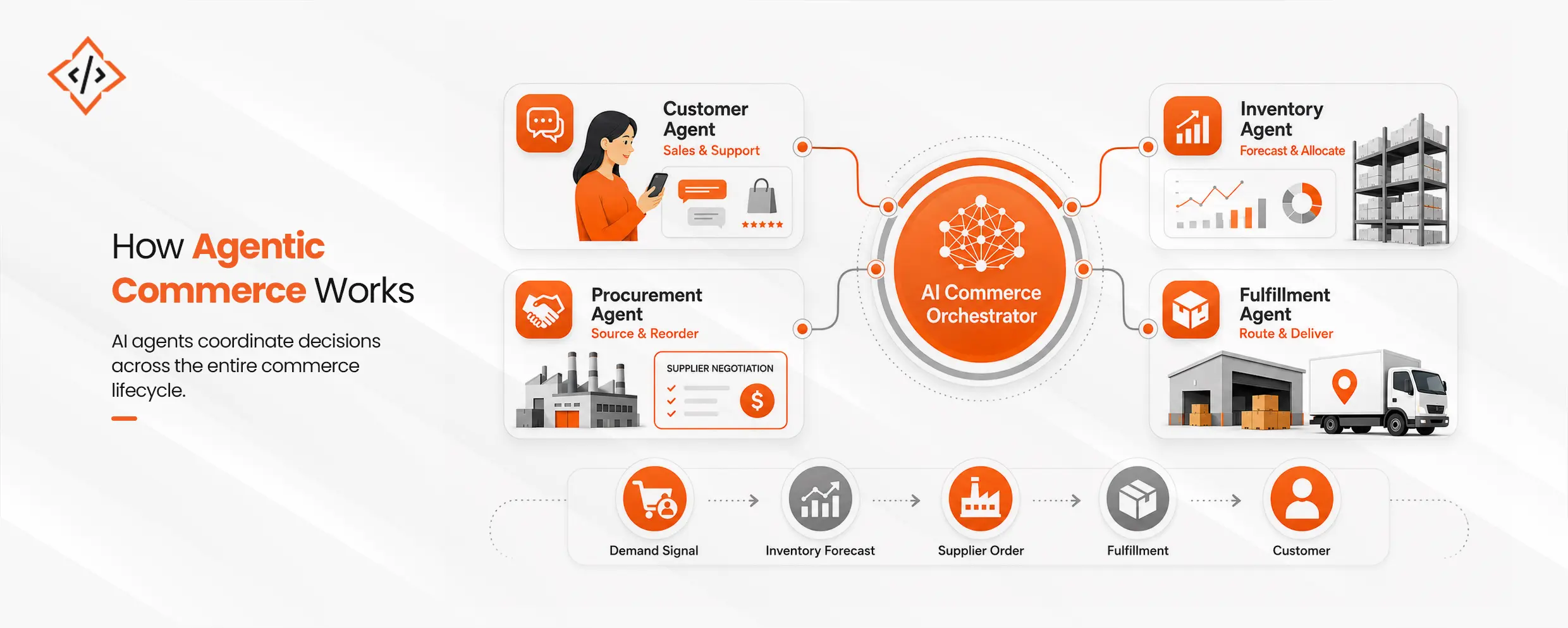
- The future of ecommerce AI automation relies on agentic systems where multiple AI agents collaborate to negotiate procurement and fulfill orders independently.
Introduction
AI automation in ecommerce directly multiplies online sales by moving retail operations from manual reaction to predictive execution. Relying on static rules and manual merchandising creates severe operational bottlenecks that permanently cap revenue growth.
To resolve this, cognitive AI agents provide independent reasoning to help systems adapt autonomously to real-time buyer behavior. The urgency for this shift is evident in recent data.
According to McKinsey’s State of AI 2025 report, nearly half of large enterprises have fully scaled AI implementations. Top brands are actively moving past legacy workflows to adopt intelligent systems. Building an autonomous, revenue-generating architecture requires a targeted deployment of specific algorithmic models backed by professional AI development services. Retailers must look beyond basic plugins and adopt enterprise-grade ecommerce AI automation to secure higher margins.
Implementing these intelligent tools allows operations leaders to reduce overhead while effectively maximizing customer lifetime value. This transition separates market leaders from organizations struggling to manage operational complexity.
Intelligent systems drive immediate revenue by replacing static pricing and generic storefronts with hyper-personalized, real-time conversion triggers. Transitioning to ecommerce AI automation removes manual guesswork from daily sales operations. Operations leaders can deploy these algorithms to capture lost revenue instantly.
Algorithmic Price Optimization
Managing catalog pricing manually is no longer a sustainable strategy for modern e-commerce solutions. Operations teams must adopt multivariate pricing models to compete effectively. These models continuously scan competitor stock levels, localized demand surges, and historical purchasing trends.
According to McKinsey’s insights on dynamic pricing in e-commerce, online retailers deploying algorithmic pricing engines achieve a 5 to 10 percent increase in profit margins. This financial gain occurs because companies stop mispricing highly sensitive products during critical shopping windows.
- Margin Protection: Algorithmic systems adjust product costs dynamically to protect your baseline profit margins.
- Peak Velocity Adjustments: This ecommerce automation handles high-velocity sales events flawlessly without requiring any human oversight.
- Market Positioning: The AI continuously monitors competitor behavior and repositions your pricing to capture maximum buyer interest.
- Scalable Execution: Retailers can easily deploy these automated pricing rules across thousands of active products simultaneously.
Predictive Inventory Allocation
Shipping delays consistently destroy customer trust and reduce repeat purchases. AI for ecommerce solves this logistical challenge by moving stock closer to predicted demand hubs. Intelligent systems determine where specific products will be needed before actual orders are placed. This replaces manual guesswork with proactive positioning.
- Demand Forecasting: Algorithms evaluate regional weather patterns, localized social trends, and historical buying cycles.
- Warehouse Routing: Intelligent systems automatically allocate products to the fulfillment centers nearest to the anticipated local buyers.
- Conversion Impact: This predictive inventory allocation strategy drastically reduces overall delivery windows.
- Customer Confidence: Faster delivery promises directly increase conversion rates on your product display pages. Shoppers buy more frequently when they see guaranteed early arrival dates.
Autonomous Cart Recovery
Standard cart abandonment emails generate diminishing returns for modern retailers. Shoppers actively ignore generic reminders that lack personal relevance or financial incentive. AI sales automation solves this by generating individualized discount thresholds. The system bases these unique promotional offers on a user’s past purchase history and personal price sensitivity.
- Precision Discounting: The algorithm offers the exact discount required to convert a specific buyer. It prevents your brand from giving away unnecessary profit margins.
- Timing Optimization: An intelligent engine predicts the exact hour a specific user is most likely to complete a transaction.
- Channel Selection: The automation routes the recovery message through the specific communication channel the buyer prefers.
- Contextual Messaging: The generated content directly references the abandoned items while presenting a highly relevant reason to return.
By implementing these targeted AI automation solutions for retailers, organizations can secure higher conversion rates immediately. Retail CTOs who prioritize these autonomous systems ensure their digital storefronts remain highly profitable. They eliminate manual operational friction while providing an exceptionally tailored shopping journey.

See how your current sales architecture compares to a fully autonomous setup by talking to the CodeTrade team. Deploying these intelligent algorithms today ensures your digital storefront stops losing revenue to manual pricing and abandoned carts.

What Are Essential AI Ecommerce Solutions?
The non-negotiable AI ecommerce solutions for 2026 include context-aware conversational agents, dynamic rendering engines, and autonomous marketing bidding systems. Transitioning to these cognitive AI tools ensures your online store converts visitors efficiently. Digital operations leaders rely on these three foundational technologies to scale revenue without expanding their support teams. These setups remove manual bottlenecks from daily retail workflows to ensure continuous operational efficiency.
Context-Aware Chatbots
Legacy customer service bots often frustrate shoppers with repetitive, scripted answers and limited capabilities. Modern AI chatbots for ecommerce use Retrieval-Augmented Generation to securely pull information from live ERP and CRM data.This technical upgrade transforms a basic chat window into a fully capable digital sales associate.
- Order Management: These intelligent agents allow users to modify active orders or update shipping addresses instantly.
- Complex Returns: Shoppers can process complex returns directly within the chat interface without waiting for human approval.
- Targeted Cross-Selling: The system analyzes the current cart and delivers highly relevant cross-sells naturally within the conversation.
- Customer Retention: Resolving issues immediately within the chat interface prevents buyers from abandoning their purchase journey.
- Multilingual Support: Advanced bots translate technical product specifications accurately for international buyers in real time.
Dynamic Storefront Rendering
Static homepages force every visitor to navigate the exact same generic product hierarchy. Advanced AI-driven ecommerce engines completely redesign the homepage layout for each visitor based on live browsing behavior.
According to a 2025 Forrester Total Economic Impact study, organizations deploying advanced personalization tools achieve a 446 percent three-year ROI. This financial gain occurs because tailored digital experiences reduce friction and guide shoppers directly to highly relevant items.
- Behavioral Adaptation: The storefront shifts categories and banners based on the specific intent of the current user.
- Product Hierarchy: Returning customers see their preferred brands and sizes prioritized at the top of the page.
- Visual Personalization: The engine swaps lifestyle imagery to match the predicted demographic profile of the buyer.
- Conversion Lift: Eliminating irrelevant products from the initial view dramatically increases the average order value.
- Frictionless Navigation: Shoppers find exactly what they want quickly without using the search bar or scrolling endlessly.
Autonomous Ad Bidding
Manual campaign management drains budgets through inefficient bidding and delayed performance optimization. True ecommerce marketing automation continuously shifts advertising budgets across social channels based on live conversion efficiency.
- Real-Time Optimization: The system instantly reallocates funds to the specific campaigns generating the highest immediate return on ad spend.
- Waste Reduction: Autonomous bidding eliminates wasted ad spend by pausing underperforming ads before they consume significant budget.
- Audience Discovery: The machine learning model autonomously identifies entirely new buyer segments based on subtle behavioral patterns.
- Creative Testing: The algorithm continuously rotates promotional copy and visuals to determine the highest converting combination for each audience segment.
- Budget Allocation: The AI predicts seasonal trends and automatically reserves marketing capital for high-converting shopping periods.
Implementing these intelligent systems removes the technical barriers limiting your digital growth. Retail leaders who deploy these targeted tools build a resilient and highly profitable digital architecture.
Where Do Automation Deployments Fail?
Deployments typically stall when retailers layer complex machine learning models over fragmented legacy data silos instead of unifying their backend architecture first. Treating AI as a simple add-on rather than a foundational shift guarantees failure. Digital operations leaders must prioritize structural data health before scaling any intelligent workflows.
Fragmented Data Silos
True ecommerce sales automation requires a unified data stream combining CRM, ERP, and supply chain inputs seamlessly. Most organizations still operate with disjointed systems where inventory software cannot communicate directly with the marketing engine. This disconnect creates severe operational blind spots that hurt the bottom line.
- Incomplete Context: Predictive models generate costly false positives when trained on isolated datasets. They misinterpret customer intent entirely.
- Inventory Blind Spots: Predictive models might promote a product that the warehouse cannot fulfill in time if data is disconnected.
- Data Unification: Retail CTOs must build a centralized data lake before deploying advanced algorithmic models or AI automation services. Clean data is mandatory.
Overlooking Edge Cases
Traditional linear automation breaks instantly when consumer behavior falls outside narrow, pre-set rules. Basic bots cannot process unusual requests like splitting shipments across multiple addresses for a single order. When consumer behavior falls outside narrow pre-set rules, the customer experience degrades rapidly.
- Rule-Based Limitations: Relying on rigid logic frustrates buyers with complex or highly specific needs.
- Cognitive Agents: Retailers must deploy cognitive AI agents capable of independent reasoning to handle exceptions gracefully.
- Contextual Routing: These intelligent systems understand intent and route complex edge cases to human specialists when necessary. They prevent endless frustrating loops.
Ignoring Post-Purchase Friction
Brands frequently focus heavily on front-end acquisition while neglecting automated fulfillment tracking and proactive shipping communications. Acquiring a new customer is ineffective if the post-purchase experience destroys their trust in the brand. Modern buyers expect seamless execution throughout the transaction.
According to a McKinsey logistics report, 85 percent of consumers will abandon a retailer permanently after experiencing a poor delivery process.
- Fulfillment Expectations: Customers expect proactive, real-time updates regarding their shipment status without manual tracking.
- Proactive Communication: AI automation in ecommerce automatically alerts buyers about potential logistical delays before issues escalate.
- Customer Retention: Securing repeat buyers depends entirely on frictionless order fulfillment and highly transparent communication strategies.
Implementing robust AI automation solutions for retailers means optimizing the entire operational lifecycle from start to finish. You cannot focus solely on the initial checkout phase.
How Will Agentic Commerce Scale?
Agentic commerce will scale by shifting from assistive software to autonomous multi-agent systems that negotiate, purchase, and fulfill orders independently. This evolution entirely redefines standard ecommerce AI automation capabilities.
Multi-Agent Orchestration
Distinct AI systems will soon collaborate entirely behind the scenes to divide complex operational workloads effectively. One specialized agent handles vendor procurement continuously while another optimizes front-end customer interactions simultaneously.
- Task Delegation: Specialized models manage distinct operational domains without requiring constant human input.
- Synchronized Execution: Front-end sales data instantly informs back-end supply chain negotiations.
- Seamless Integration: Multiple intelligent agents communicate directly to resolve fulfillment conflicts instantly.
Predictive Replenishment Cycles
Intelligent AI automation solutions for retailers will autonomously trigger wholesale reorders to prevent costly stockouts during critical shifts. The system continuously monitors predictive consumer burn rates and evaluates global supply chain volatility before finalizing purchases.
- Autonomous Purchasing: Cognitive agents negotiate vendor contracts proactively based on real-time inventory deficits.
- Risk Mitigation: The system automatically reroutes procurement orders when factory delays occur to minimize downstream impact.
- Margin Protection: Algorithmic forecasting ensures organizations avoid over-ordering slow-moving inventory.

Conclusion
Stop managing static spreadsheets and start deploying intelligent infrastructure immediately. Relying on manual operations is no longer viable for modern digital retail. Transitioning to comprehensive ecommerce AI automation serves as a mandatory baseline for market survival. Operations leaders must map their current friction points and unify their data lakes first. Building a sequenced AI deployment roadmap is the only way to capture immediate ROI.
This structural evolution requires a specialized approach rather than experimental guesswork. Moving from legacy software to autonomous systems demands precise technical execution and custom AI software development.
CodeTrade builds the exact intelligent data infrastructure that modern retailers need to scale effectively. The engineering team deploys targeted AI automation solutions for retailers directly into existing backend environments. Partner with a proven technical team to turn operational friction into measurable automated revenue.
Evaluate your digital infrastructure's readiness for agentic commerce and talk to the CodeTrade team to build a sequenced AI deployment roadmap. The sooner this intelligent architecture is deployed, the sooner your retail operations achieve measurable automated profitability.
FAQs
Retailers must first automate high-friction processes like dynamic pricing, customer support, and predictive inventory management to capture immediate revenue gains. Prioritizing these specific AI ecommerce solutions prevents costly stockouts and ensures profit margins remain protected during sudden demand spikes.
Yes, modern AI automation for ecommerce integrates directly into existing platforms through secure API connections without requiring a complete rebuild. Digital operations leaders easily connect cognitive agents to legacy ERP and CRM systems to upgrade their current digital storefront capabilities.
AI automation in ecommerce does not replace employees but rather shifts their focus from manual data entry to strategic growth. Autonomous systems manage repetitive tasks like inventory routing, which frees your human team to focus entirely on high-level operational strategy.
Small businesses absolutely can deploy AI automation solutions for retailers by implementing scalable micro-agents for specific operational bottlenecks. Instead of buying massive enterprise suites, smaller brands use targeted algorithms to optimize ad bidding and automate cart recovery workflows.
AI-driven ecommerce systems excel at managing multiple sales channels simultaneously by centralizing data from every active marketplace and social platform. This cross-channel integration ensures pricing and inventory levels remain perfectly synchronized across your entire digital retail ecosystem without manual updates.
Chand Prakash founded CodeTrade India and continues to lead it as CTO, shaping the technical direction of the company since its early days. He has spent his career solving hard engineering problems and building teams that ship reliable software, with a focus on ERP, e-commerce, and custom enterprise platforms.







 Chand Prakash
25 August 2026
Chand Prakash
25 August 2026 Chand Prakash