






Odoo Development
 Hardik Soni
28 September 2026
Hardik Soni
28 September 2026
Odoo 20 AI features: what the AI agents actually do
 Hardik Soni
The choice of Odoo AI vs NetSuite AI dictates whether your company operates with strict financial governance or adaptable process automation. Artificial intelligence adoption is widespread, but measurable business value remains rare.
According to a Gartner report, finance organizations using cloud ERP applications with embedded AI assistants will see a 30 percent faster financial close by 2028. Achieving these operational gains requires strategic AI development services rather than just basic software deployment.
Reaching that top tier requires more than purchasing standard ERP automation software. You must select intelligent ERP systems that directly align with your operational capacity. This NetSuite AI comparison explores how strict financial controls stack up against open-source flexibility. Finding the right native AI automation framework will ultimately determine your future scalability.
NetSuite embeds artificial intelligence directly into core financial workflows to automate account reconciliations and complex pricing management. Oracle utilizes structured machine learning and generative models to enforce consistency across enterprise operations. This native AI automation ensures that operational data remains secure without requiring disconnected third-party tools.
Organizations evaluating enterprise AI software benefit from unified data structures built across ledger and inventory modules. Selecting appropriate ERP AI solutions requires evaluating how deeply these models integrate into existing daily processes.
The Intelligent Close Manager systematically streamlines month-end financial tasks across international business units. Integrated algorithms evaluate historical ledger records to identify discrepancies and flag unusual journal entries automatically. AI-powered transaction matching speeds up reconciliation by predicting likely ledger pairings. High confidence scoring accurately guides this automated matching process.
Furthermore, a November 2025 Gartner survey found that 34 percent of finance organizations now use AI specifically for error and anomaly detection. Automated controls maintain strict ledger integrity throughout every step of the financial period. This functionality reduces manual auditing work for executives managing ERP automation software. Decision-makers planning a NetSuite AI implementation prioritize these features to ensure reporting precision and speed.
The 2026 SuiteAgents rollout introduces intelligent software assistants built for intricate operational processes. These autonomous units execute multi-step workflows like field service dispatch entirely within the system’s strict governance model. The agents analyze schedule context, assign service technicians, and update stock records without human effort.
Autonomous processing minimizes operational delays while maintaining complete audit trails for system administrators. This built-in control provides clear governance advantages when reviewing an AI ERP comparison. Partnering with a skilled AI ERP implementation partner ensures these agentic workflows match established corporate procedures.
NetSuite Analytics Warehouse offers accessible reporting through natural language user interfaces. Advanced natural language processing allows users to generate tailored visualisations without needing a specialized data analyst. Business leaders query revenue trends or profit margin changes using simple conversational prompts.
Interactive dashboards refresh instantly to present updated metrics whenever underlying operational tables change. Operating intelligent ERP systems allows leadership to convert raw transactional data into actionable board-ready charts. Decision-makers reviewing NetSuite AI features value how generative analytics eliminates reporting bottlenecks across business units.
Odoo delivers artificial intelligence through customizable AI agents and an open architecture. This setup allows businesses to automate processes across any module. The platform focuses on contextual assistance to speed up daily ERP tasks. It relies heavily on prompt-based server actions instead of rigid coding.
Organizations comparing Odoo AI vs NetSuite AI often prefer this modular flexibility. The open-source environment enables deep operational customization without vendor lock-in. Odoo AI features prioritize adaptability over strict financial standardization. Enterprise leaders gain full control over their internal automation strategies.
Odoo artificial intelligence introduces intelligent agents trained on company-specific documents. These AI units handle multi-department status tracking effortlessly. They take autonomous actions like updating records or notifying project managers. An AI-powered workflow automation system ensures processes keep moving without human bottlenecks.
By 2026 up to 40 percent of enterprise applications will include task-specific agents according to Gartner. Odoo AI automation brings this exact capability to mid-market firms today. Users define the specific instructions and tool access for each custom agent. This targeted approach prevents agents from accessing restricted financial data.
The platform highlights a powerful Ask Odoo feature for instant data retrieval. Users bypass complex domain filters by typing plain-language requests. This tool instantly surfaces specific records across different business modules. Team members find invoices or customer profiles without navigating nested menus.
This feature represents a massive shift in standard ERP navigation. Finding custom ERP AI solutions usually requires complex database querying skills. Odoo makes querying accessible to every employee regardless of technical background. Faster record retrieval directly improves daily workforce productivity.
The latest release discusses new AI field types for backend configuration. Businesses build server actions by simply describing the desired rule. This method drastically reduces the need for bespoke developer scripts. Administrators type a logical command to trigger complex system behaviors.
Planning a successful Odoo AI implementation requires understanding these low-code capabilities. Companies can hire Odoo developers to structure these prompts securely. This approach keeps system maintenance costs low while maintaining operational speed. IT teams spend less time writing basic code logic.
NetSuite native AI automation enforces strict financial guardrails while Odoo delivers deep custom capabilities across many different business departments.
| Feature Category | NetSuite AI Automation | Odoo AI Automation |
|---|---|---|
| Core Operational Focus | Focuses on strict financial compliance and anomaly detection. It maintains unified ledger controls across global enterprise operations. | Focuses on cross-module workflow automation and modular adaptability. It delivers flexible operational processes across diverse business departments. |
| Data Querying Tools | Uses NetSuite Analytics Warehouse powered by generative business intelligence to query complex multi-currency financial records. | Employs Ask Odoo natural language search to retrieve records instantly using simple conversational text commands without complex filters. |
| Custom Logic Generation | Relies on SuiteScript GenAI API for developers to build secure, rule-based workflows within strict platform guardrails. | Uses prompt-based server actions allowing administrators to create complex system logic without writing bespoke backend code. |
| Document Processing | Features AI Bill Capture to extract structured financial information from vendor invoices into accounts payable ledgers automatically. | Features context-aware file analysis to parse varied document formats and route uncertain entries for human verification. |
| Agentic Capabilities | Deploys the pre-built SuiteAgents framework governed by corporate security policies. | Enables custom AI agents trained on internal standard operating procedures to manage multi-department status updates autonomously. |
| Financial Governance | Enforces rigid global compliance standards to guarantee complete auditability for enterprise organizations preparing for public filings. | Offers modular governance controls where individual department managers configure specific data access limits for custom workflows. |
| Implementation Model | Requires specialized NetSuite AI consulting to configure complex machine learning models within established corporate structures. | Allows companies to hire Odoo developers to build custom ERP AI solutions tailored to unique business needs. |
| Operational Scalability | Scales by deploying standardized financial templates across expanding international subsidiaries and major business units seamlessly. | Scales by launching targeted autonomous agents across evolving manufacturing, inventory, and supply chain management operations. |
NetSuite is the optimal choice for organizations prioritizing strict financial controls, whereas Odoo is the better option for organizations prioritizing agility and custom ERP AI solutions. The main difference is data governance practices and third-party integrations.
Each software provider utilizes a distinct architectural approach. Businesses must map their strict compliance needs clearly before comparing Odoo AI vs NetSuite AI modules directly.
Both platforms offer impressive automation capabilities but serve radically different corporate structures. Finding the correct fit ensures your technical investment translates into measurable operational returns.
NetSuite provides rigorous audit trails and out-of-the-box financial AI designed for enterprise accountability. Companies preparing for an IPO or major acquisition often require NetSuite to meet strict regulatory expectations. The platform eliminates the risk of manual intercompany accounting through automated cross-charges and real-time roll-ups.
A 2025 Future Market Insights report estimates the global cloud ERP market will reach USD 98.1 billion this year, driven by enterprises demanding scalable compliance. Features like the Intelligent Close Manager provide the exact structured data that institutional investors and external auditors require. NetSuite AI implementation prevents unauthorized data manipulation while accelerating the month-end close reliably.
Odoo allows teams to deploy AI agents that adapt to unique supply chain or manufacturing workflows. Growing mid-market companies often choose Odoo to establish a flexible operational baseline instead of strict financial enforcement. The platform offers an open-source foundation where developers can build custom tools without expensive middleware.
Scaling AI successfully requires intelligent workflows that align perfectly with existing internal operations. Firms can hire Odoo developers to configure intelligent agents securely around specific departmental needs. This adaptability ensures that the ERP system evolves directly alongside the growing business.
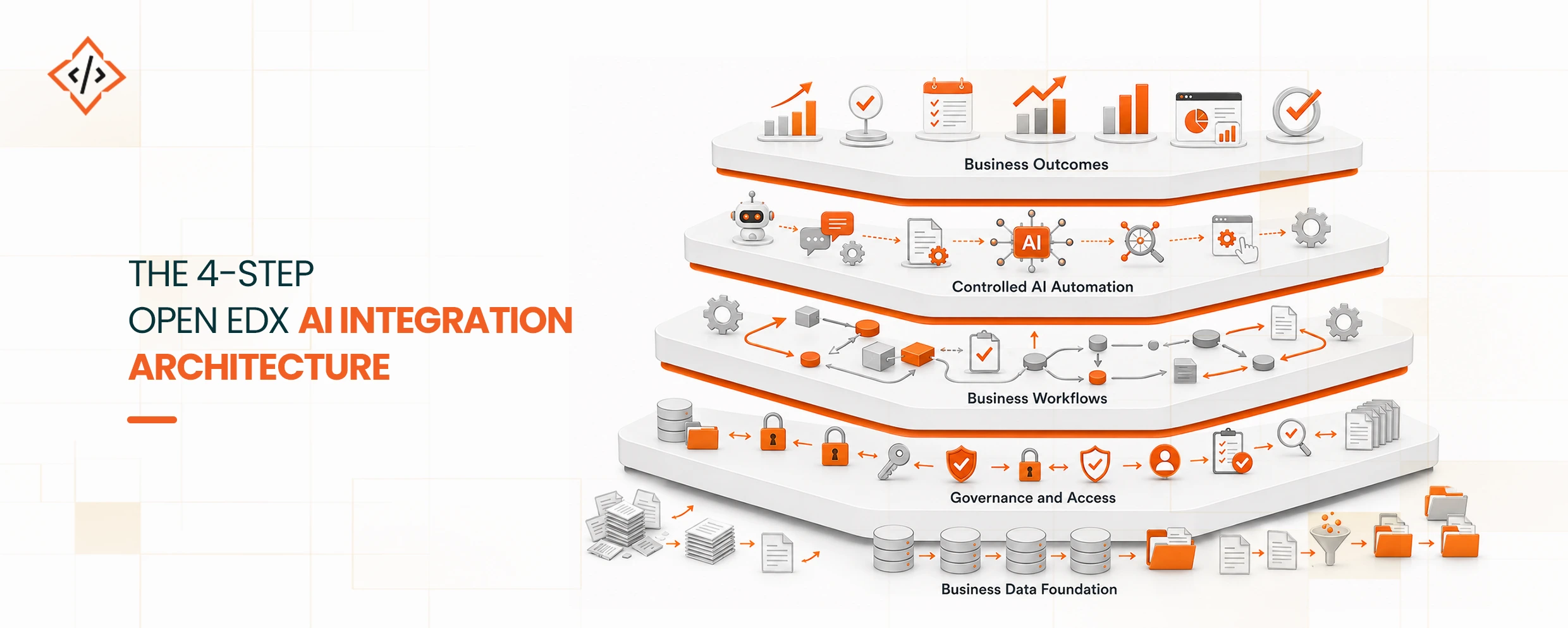
A successful AI ERP implementation requires auditing existing data quality and establishing clear governance before deploying intelligent workflows. Artificial intelligence models will hallucinate or fail entirely if fed unorganized legacy data.
An early 2026 MIT Sloan study found that 95 percent of corporate AI pilots fail to generate measurable financial benefits. Ensuring foundational data remains clean must precede any new software configuration.
Partnering with an experienced AI ERP implementation partner is critical when configuring complex components like the Model Context Protocol (MCP) or SuiteAgents. NetSuite relies on structured environments where custom workflows must adhere strictly to established architectural guardrails.
Expert guidance prevents unwanted data limits and guarantees compliance with global privacy standards. Specialized NetSuite AI consulting helps technical leaders map their exact business processes into the software correctly. This precision avoids deployment delays and keeps automated financial reporting completely accurate.
Companies regularly hire Odoo developers to structure prompt-based actions and server automation correctly. The platform’s open nature provides massive flexibility but requires careful configuration to maintain strong internal security. An experienced team ensures custom agents are properly restricted to specific department modules preventing unauthorized data access.
Specialized Odoo AI consulting focuses on linking these intelligent agents directly to clean internal databases. Proper setup allows mid-market firms to scale their custom ERP AI solutions without breaking existing workflows.
True intelligent automation requires fundamentally redesigning workflows rather than simply adding basic chatbots to outdated processes. Businesses must restructure their operations entirely to ensure the automation performs meaningful technical work. Artificial intelligence fails when built upon unorganized legacy data or misaligned software architectures.
Technical leaders must audit internal data governance and select the platform matching their technical capabilities. Closing this operational gap requires a strategic roadmap connecting raw business data directly to native AI capabilities in daily execution. Deciding between Odoo AI and NetSuite AI ultimately depends on prioritizing either open-source flexibility or structured financial compliance.
CodeTrade provides specialized Odoo AI consulting and custom ERP AI solutions for complex business requirements. Our Odoo development services build secure system integrations that transform routine manual tasks into automated background workflows. Partnering with a reliable AI ERP implementation partner ensures technology investments produce measurable operational value.
Odoo AI focuses on open-source modular workflow automation across all departments, whereas NetSuite AI specializes in strict financial governance. NetSuite enforces rigid audit compliance using proprietary machine learning models, while Odoo provides configurable autonomous agents and low-code prompts.NetSuite AI offers superior native automation for enterprise financial close, while Odoo AI provides broader cross-departmental workflow automation. NetSuite automates transaction matching and dynamic pricing out-of-the-box, whereas Odoo excels at document extraction and custom agentic task routing.Odoo AI is more suitable for small and medium-sized businesses due to its modular pricing model and adaptable open-source architecture. Mid-market teams can deploy targeted AI agents without incurring the high licensing fees associated with NetSuite's complex enterprise tier.NetSuite AI is better for large enterprises requiring strict multi-currency financial compliance, automated intercompany accounting, and rigorous audit trails. Oracle's SuiteAgents framework and Intelligent Close Manager handle complex global corporate structures far more effectively than modular alternatives.Odoo AI is significantly easier to customize because administrators build server actions using plain-language prompts instead of writing complex code. Its open platform allows developers to train custom agents on internal documents without relying on proprietary API restrictions.
 Hardik Soni
 Hardik Soni
 Hardik Soni
 Chand Prakash
 Chand Prakash